
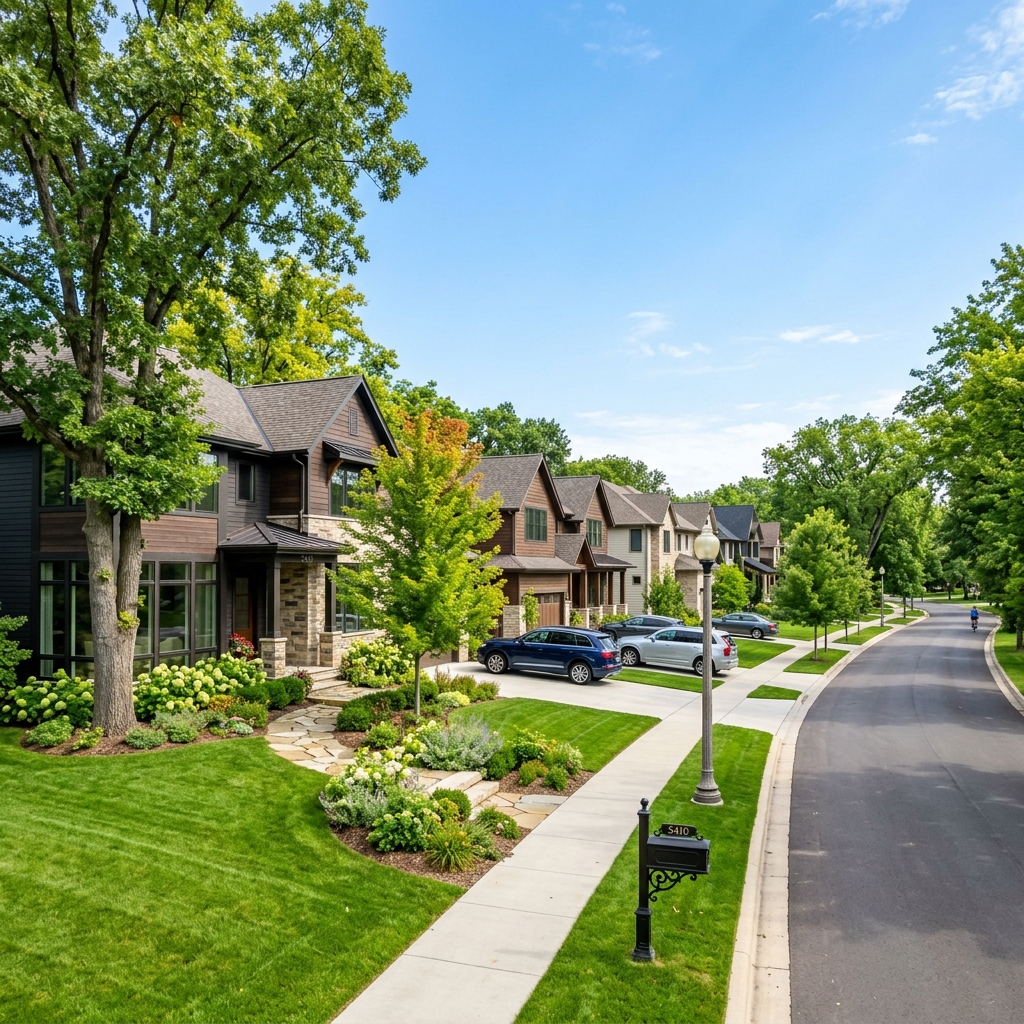





How Much Down Payment Do You Need to Buy a Home? It May Not Be 20%
Before deciding how much to put down, understand your down payment options, estimated total cash needed at closing, and the amount of savings you want left after closing.
One of the most common things I hear from homebuyers is:
“I’m still saving because I don’t have 20% down yet.”
The 20% number is deeply tied to homebuying. Many people believe they need 20% down before they can even start looking at homes.
In reality, some qualified buyers may have mortgage options with much smaller down payments. Certain conventional programs can allow as little as 3% down, while FHA financing may allow qualified borrowers to put 3.5% down. Eligibility depends on the loan program, borrower profile, property, and lender requirements. Fannie Mae HomeReady and the U.S. Department of Housing and Urban Development provide program information for these options.
But the down payment percentage is only one number in the decision.
Before deciding how much to put down, I want buyers to understand three numbers:
- The down payment options they may qualify for
- Their estimated total cash needed at closing
- The amount of savings they want left after closing
When you look at all three, you get a much clearer picture of what you can comfortably afford.
1. Find the Down Payment Options You May Qualify For
You may not need 20% down.
Depending on your loan program, finances, and the home you are buying, you may qualify for a lower down payment option. For example, Fannie Mae’s HomeReady program may allow eligible borrowers to buy a primary residence with as little as 3% down, subject to income and other program requirements. Fannie Mae HomeReady
FHA financing may allow qualified borrowers to put 3.5% down. HUD states that the down payment can be as low as 3.5% of the purchase price for eligible FHA borrowers. HUD FHA loan information
Let’s use a $400,000 home as an example:
| Down payment | Dollar amount |
|---|---|
| 3% down | $12,000 |
| 3.5% down | $14,000 |
| 5% down | $20,000 |
| 20% down | $80,000 |
That is a large difference.
Other buyers may decide that 5%, 10%, 15%, or 20% down makes more sense for their goals. The key word is qualified.
The minimum down payment available to one buyer may not be available to another. Eligibility can depend on:
- Credit profile
- Income and debts
- Loan program rules
- Occupancy type
- Property type
- Purchase price
- Underwriting requirements
This is why I would not start your home search by picking a down payment percentage at random.
Start by finding out which options are actually available to you. Then compare them side by side.
2. Calculate Your Estimated Cash Due at Closing
This is where many first-time buyers get surprised.
If you are putting $20,000 down, that does not mean you need only $20,000 to close. Your down payment is one part of the transaction.
You may also have closing costs and prepaid expenses. Closing costs are the fees and expenses tied to finalizing the mortgage and purchase. The Consumer Financial Protection Bureau explains that the Closing Disclosure shows these costs and reflects agreed-upon seller credits. CFPB Closing Disclosure explainer
You may also have credits that lower the amount you need to bring to closing, including:
- Earnest money already paid
- Seller credits, when permitted
- Lender credits, if available
- Gift funds or down payment assistance, if allowed by the loan program
Here is a simplified example for a $400,000 home with 5% down:
| Example item | Amount |
|---|---|
| Down payment | $20,000 |
| Estimated closing costs and prepaid items | $10,000 |
| Estimated total before credits | $30,000 |
| Less earnest money already paid | -$5,000 |
| Less eligible seller credit | -$6,000 |
| Estimated cash due at closing | $19,000 |
That $19,000 estimate is more useful than simply saying, “I’m putting 5% down.”
Your actual cash due at closing will vary. It can depend on the loan type, loan amount, interest rate, property taxes, homeowners insurance, closing date, seller credits, earnest money, and other transaction details.
The point is simple: the down payment alone does not tell you how much cash you actually need.
3. Decide How Much Savings You Want Left After Closing
This may be the most overlooked number of all.
Buying a home should not require draining every dollar from your bank account.
You still have a life after closing. You may have expenses for:
- Moving
- Furniture
- Repairs
- Appliances
- Utilities
- Maintenance
- Everyday emergencies
That is why I encourage buyers to set a personal savings floor before deciding how much to put down.
Your savings floor is the amount of money you want to leave untouched after closing.
For example, imagine your estimated full housing payment is about $2,800 per month.
- At least three months of housing payments in reserve ($8,400)
- About $3,000 available for moving expenses and early repairs
Your personal savings floor is $11,400.
Now the question changes.
Instead of asking, “What is the biggest down payment I can make?” ask:
“How much can I comfortably put down while still keeping at least $11,400 in savings?”
Those are very different questions.
Put All Three Numbers Together
This is where a mortgage strategy becomes clearer.
Imagine you have $35,000 in savings. You want to keep at least $11,400 untouched after closing.
Using the same $400,000 purchase example, with estimated costs, earnest money, and seller credits, let’s compare two potential down payment options.
| Scenario | 3% down | 5% down |
|---|---|---|
| Down payment | $12,000 | $20,000 |
| Estimated cash due at closing | About $11,000 | About $19,000 |
| Savings left after closing | About $24,000 | About $16,000 |
| Savings above $11,400 floor | About $12,600 | About $4,600 |
Both options may work for this buyer. Both leave savings after closing.
But the down payment percentage alone does not tell you which choice is better.
To make that decision, you also need to compare the full mortgage payment and the overall cost of each loan.
Compare the Full Monthly Payment
A smaller down payment usually means borrowing more money. Depending on the loan program, it may also affect mortgage insurance and other costs.
A larger down payment may lower the amount borrowed and reduce the monthly principal-and-interest payment. But it also means less cash stays available after closing.
That is the tradeoff.
For each down payment option, compare:
- Principal and interest
- Property taxes
- Homeowners insurance
- Mortgage insurance, if applicable
- HOA dues, if applicable
- Estimated cash due at closing
- Estimated savings remaining after closing
- Estimated long-term loan cost
Now you are making a decision using the full picture—not just a single percentage.
Putting More Down Is Not Always Better
Many buyers assume a larger down payment is always the smarter choice.
Sometimes it is. Sometimes it is not.
Imagine two buyers purchasing the same home.
One buyer puts nearly every dollar they have into the down payment. The other makes a slightly smaller down payment and keeps a healthy cash reserve.
Three months after closing, the furnace stops working.
Which buyer is in the stronger position?
It may not be the buyer who made the largest down payment.
Homeownership comes with costs that renters may not have paid before. Keeping cash available can be part of a smart homebuying plan.
Why Does 20% Down Still Matter?
There are valid reasons some buyers choose to put 20% down.
For many conventional loans, having 20% equity can eliminate the monthly private mortgage insurance requirement. A larger down payment can also lower the amount borrowed and reduce the monthly payment.
But avoiding mortgage insurance should not automatically be the only goal.
Delaying a home purchase for years because you believe you must reach 20% down can have tradeoffs. During that time, home prices, mortgage rates, rent, income, and your own life plans can change.
There is no one down payment percentage that is right for everyone.
The better question is:
“Which down payment gives me the right balance between my monthly payment, cash due at closing, and savings after closing?”
Ask Your Mortgage Broker To Show You More Than One Option
Before choosing a down payment amount, ask your mortgage broker to show you at least two scenarios at the same purchase price.
For example:
- 3% down versus 5% down
- 5% down versus 10% down
- 10% down versus 20% down
For each option, ask to see the estimated full monthly housing payment.
That includes principal, interest, property taxes, homeowners insurance, mortgage insurance when applicable, and HOA dues when applicable.
Also ask to see:
- Estimated cash due at closing
- Estimated savings remaining after closing
- How seller or lender credits affect your costs
- The long-term cost and payment tradeoffs of each option
Then choose the loan structure that keeps the payment manageable without draining your savings more than you are comfortable with.
The Goal Is Not To Put Down the Most Money
The goal is not always to put down the least money, either.
The goal is to structure your purchase so the numbers work together.
- Your down payment should make sense.
- Your monthly payment should feel manageable.
- Your cash to close should be clear.
- Your savings after closing should provide breathing room.
If you are thinking about buying a home in southern Wisconsin, I can help you compare different down payment scenarios before you start making offers.
Sometimes seeing 3%, 5%, and 20% down side by side makes the decision much easier.
All loans are subject to approval. Equal Housing Lender.